Commercial Solar Installation Companies: Achieving Million-Dollar Projects Without Delays or Cost Overruns
May 6, 2026
Commercial Solar Installation Companies: Achieving Million-Dollar Projects Without Delays or Cost Overruns
May 6, 2026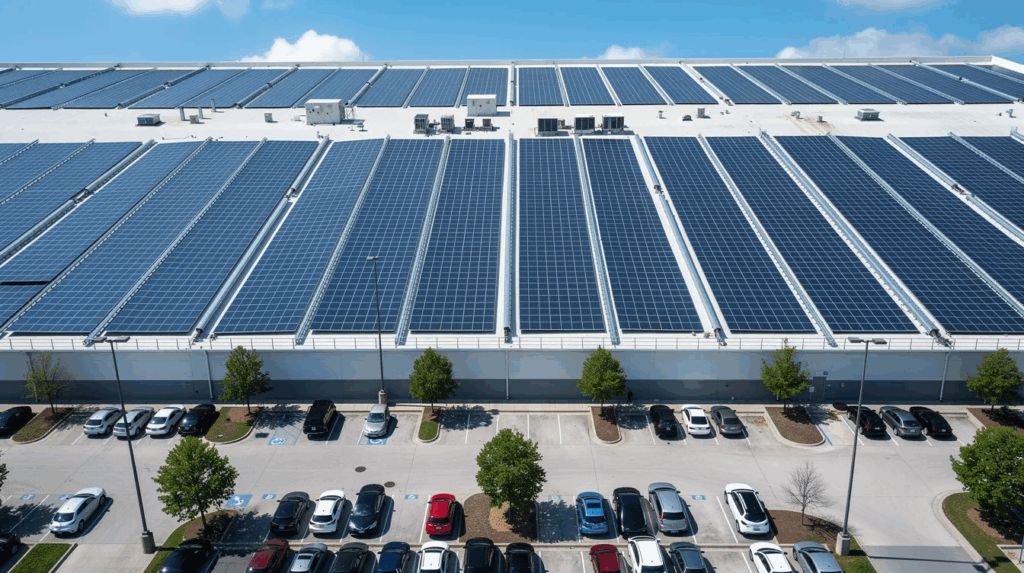
Choosing the right PV panel installers is one of the most consequential decisions a commercial property owner or nonprofit director will make. This guide breaks down what business decision-makers in Connecticut, Rhode Island, Massachusetts, and Westchester County should know before committing to a solar project-from installer qualifications and incentives to long-term system performance.
Key Takeaways
- PurePoint Energy is a local commercial PV panel installer serving CT, RI, MA, and Westchester County with full turnkey EPC services-from feasibility study through post-install support.
- Decision-makers benefit from reduced energy costs, new revenue streams, predictable cash flow over decades, and a lower carbon footprint using high-efficiency solar panels and battery storage.
- PurePoint Energy manages your entire PV panel installation journey, including custom Solar PV system design, permitting, utility interconnection, construction, and ongoing maintenance.
- Current solar incentives improve ROI significantly: 30% federal ITC, IRA bonus credits, and state programs like CT’s SCEF and C-PACE financing support systems up to ~5 MW.
- Selecting a solar installer requires evaluating credentials, experience, and local expertise-not just the lowest price.
Why Choosing the Right PV Panel Installer Matters for Your Business
Hiring a solar installer is a strategic financial decision, not just a construction choice. For commercial, agricultural, and nonprofit facilities, the company you select determines how well your Solar PV system performs, how much money it saves, and how reliably it produces electricity over 20–30 years. Local solar companies have higher customer satisfaction rates because they understand regional permitting rules, utility net-metering policies, and local incentive programs better than national firms working from a distance.
Choosing purely on lowest solar cost introduces real risk. Unusually cheap quotes may indicate low-quality materials or inexperienced crews. Undersized systems, poor roof integration, missed rebates, underperforming solar panels, and weak warranties all erode the returns you expect. NABCEP certification is considered the gold standard for solar PV installation professionals, so verify licenses and check for industry certifications before signing. PurePoint Energy focuses exclusively on commercial, agricultural, and nonprofit customers-positioning itself as an expert partner for complex solar energy projects for schools, warehouses, farms, and institutions rather than residential homes.
PurePoint Energy at a Glance: Local Commercial Solar PV Panel Installers
PurePoint Energy is a B2B commercial solar installation company founded in Connecticut, active since the late 2000s and has grown into a trusted provider of commercial solar power and energy storage solutions. With well over 3–5 years of business experience in this market, our team delivers solar power and energy storage across the region. Companies with in-house trained crews provide better quality control than those that subcontract, and PurePoint maintains that in-house professional capability. We company designs, installs, and services systems for:
- Commercial and industrial buildings (offices, warehouses, manufacturing)
- Agricultural operations (farms, greenhouses, barns)
- Nonprofit organizations and schools in CT, RI, MA, and Westchester County
High-efficiency photovoltaic cells maximize solar energy capture, and PurePoint commonly installs top commercial solar panels from premium manufacturers like SunPower and REC, integrating battery storage where it improves demand management or backup power. The team is familiar with roof loading constraints and local zoning considerations for rooftop, carport, and ground-mount systems across every city and neighborhood in our service area.

What Commercial Clients Can Expect from Our Solar Installation Process
Here is a step-by-step view of the commercial solar journey with PurePoint Energy. A good proposal includes a detailed site evaluation, projected energy savings, and a breakdown of costs-look for detailed written proposals rather than vague estimates from potential installers.
Initial Assessment:
- Site visit or remote assessment of roofs, parking lots, or land
- Review of 12–24 months of utility bills to size the solar panel system
- Preliminary financial modeling of savings, solar cost, payback, and potential revenue from programs like CT’s SCEF
Engineering & Design:
- Structural review of roofs to support PV panel installation and long-term system performance.
- Electrical design, including inverters, switchgear, and interconnection points
- Layout optimization to maximize kWh output while maintaining access for maintenance
Permitting & Interconnection:
- Handling local building permits, fire code requirements, and all permission needs-a reliable installer should manage all local building permits, utility interconnection paperwork, and inspections
- Coordinating with Eversource, UI, National Grid, or Con Edison to secure interconnection approvals and net metering or tariff enrollment
Construction & Commissioning:
- On-site construction management with clear communication on schedule and safety
- Testing, commissioning, and utility witness tests before energizing the solar panels
Post-Installation Support:
- Monitoring, performance reporting, and warranty coordination
- Options for ongoing operations and maintenance (O&M) visits to keep output and financial returns on track
Incentives, Financing, and Solar Cost for Businesses & Nonprofits
The true net solar cost depends heavily on federal and state solar incentives, plus project-appropriate financing; understanding the benefits and basics of solar energy helps organizations evaluate overall project value. Solar panel costs have decreased significantly in recent years, making commercial projects more accessible. While residential benchmarks offer useful context-the average San Jose homeowner needs an 8.63 kW solar panel system at an average solar installation cost of $21,203, or about $2.46 per watt, and homeowners save about $134,709 over 25 years-commercial systems in New England scale to hundreds of thousands of dollars in value and can save proportionally more.
Federal Incentives:
- 30% Investment Tax Credit (ITC) for eligible commercial entities through the Inflation Reduction Act
- Possible bonus credits for domestic content (made in America), energy communities, or low-income projects-potentially boosting the ITC to ~40%
- ITC eligibility for stand-alone battery storage supporting demand management or resilience
State & Local Programs:
- Connecticut’s Shared Clean Energy Facility (SCEF) and tariff programs for systems up to roughly 5 MW, plus the Non-Residential Renewable Energy Solutions program selecting up to 100 MW/year
- C-PACE financing in CT and potentially similar tools in RI and MA, allowing repayment via property tax assessments with minimal upfront costs
- Net metering or successor tariffs in RI and MA-including SMART 3.0 in Massachusetts-that influence how excess energy is credited
Financing Options PurePoint Helps Arrange:
- Power Purchase Agreements (PPAs) that let site hosts buy clean energy with little or no upfront cost
- Solar leases, including CT Green Bank or Inclusive Capital-backed 20-year lease models
- Traditional loans or cash purchases for organizations with capital budgets
Solar systems typically pay for themselves in about 7.08 years; commercial payback ranges of 5–10 years are common in these states when incentives and favorable tariffs apply. Nonprofits without tax liability can still benefit through third-party ownership structures where a taxable investor captures the ITC and passes value through as lower PPA or lease rates.

System Types We Install: Rooftop, Carport, Ground-Mount, and Storage
The best Solar PV system configuration depends on property type, available space, and utility tariff. PurePoint Energy delivers a full suite of commercial solar equipment and system formats:
- Flat or low-slope rooftop solar panels on membrane or metal roofs for warehouses, retail plazas, and schools
- Solar carports and canopy structures over parking lots that add shade and visible clean energy branding
- Ground-mount solar arrays on underused land at farms, corporate campuses, and industrial sites
Energy Storage Integration:
- Battery systems sized to reduce demand charges by shaving peaks, provide backup power for critical loads at night, or participate in grid services programs
- The design team models financial benefits of storage separately from solar generation to ensure the investment pays off
Equipment & Warranties: Solar panels are built to withstand harsh weather conditions-critical in New England’s climate of snow, ice, and coastal salt. Most solar panels have a warranty term of 25 years, and PurePoint ensures robust workmanship warranties typically lasting 10+ years are offered alongside efficient panel and inverter components. O&M offerings help protect these investments over decades, maintaining roof warranties, drainage, access for HVAC units, clear fire lanes, and minimizing disruption to ongoing business operations during construction.
How PV Panel Installers Like PurePoint Energy Support Long-Term Performance
Long-term system performance is where the real value of commercial solar panels is realized-and where the right installer earns your trust over the life of the project:
- Continuous monitoring to identify underperformance or faults
- Regular inspections and preventive maintenance (visual checks, electrical testing, selective cleaning)
- Energy production reports that can be compared against original projections, showing avoided utility costs, carbon reductions, and contributions to ESG or sustainability goals
- Warranty coordination with manufacturers if panel, inverter, or racking issues arise, minimizing downtime
PurePoint Energy also supports portfolio expansion-replicating successful system designs across multiple locations in CT, RI, MA, and Westchester, and planning for future additions like EV chargers, additional rooftop arrays, or expanded battery systems.

Why Businesses and Nonprofits in CT, RI, MA & Westchester Choose PurePoint Energy
What separates PurePoint Energy from other PV panel installers and solar companies in the market comes down to a co-developed, consultative approach and deep regional expertise:
- Deep familiarity with New England weather, snow loads, and coastal conditions
- Established relationships with local AHJs and utilities that streamline permitting and interconnection, keeping your project on schedule
- Single point of contact from early feasibility through commissioning-concierge-style project management that promises clear communication about milestones and site constraints
PurePoint takes pride in working with mission-driven clients: agricultural producers looking to stabilize operating costs, nonprofits and schools committed to sustainability and community leadership, and property owners seeking dependable PV solar power solutions that improve operating efficiency and long-term asset value.
Ready to take control of your energy future? Request a customized feasibility study and financial analysis for your property, or contact our commercial solar team directly to discuss your project. A site-specific proposal from PurePoint Energy will give you a clearer estimate of savings and payback than any generic online solar calculator-and there’s no commitment required to get started.
Frequently Asked Questions About Commercial PV Panel Installers
These FAQs address common concerns from commercial and nonprofit decision-makers in CT, RI, MA, and Westchester exploring solar for the first time.
How long does a commercial solar installation typically take from contract to energization?
Expect 2–4 months for design, permitting, and utility approvals depending on jurisdiction and utility queue, plus 1–3 months for on-site construction for most rooftop or carport projects. Larger ground-mount arrays sometimes extend beyond that limit. PurePoint Energy provides a projected schedule early in the process and updates clients as permits and interconnection approvals move forward. Many site hosts experience minimal disruption, with heavy construction coordinated around business operations.
Do we need to reinforce our roof before installing solar panels?
Most commercial roofs can support typical PV panel loads of about 2–4 lb/ft² without major reinforcement, but each project requires structural review. PurePoint Energy works with structural engineers to confirm that existing roofs-whether on a house of worship, a school, or a warehouse-can safely handle the load. If reinforcement is recommended, the team coordinates with roofing contractors to plan upgrades alongside the solar installation.
Can nonprofits without tax liability still benefit from solar incentives?
Nonprofits generally cannot directly use federal tax credits but can benefit indirectly through third-party ownership models like PPAs or solar leases for nonprofits. PurePoint Energy helps structure projects where a taxable investor captures the ITC and passes value through as lower rates. Additional agricultural solar grants or state-level programs may also be available.
How do batteries change the economics of commercial solar systems?
Energy storage can reduce demand charges by shaving peaks, provide backup power for critical loads, and potentially earn revenue through demand response or grid services programs. Batteries add capital cost, so PurePoint Energy performs a separate analysis to ensure expected savings justify the investment. Stand-alone storage may qualify for the federal ITC under current rules, improving project economics. In the news recently, Connecticut’s Public Act 26-127 reinforced the state’s commitment to battery storage alongside solar through 2035.
Will a PV system affect the future sale or refinancing of my commercial property?
Well-designed, professionally installed solar systems often increase property appeal and predictable operating income. Comparing solar prices online can save homeowners around $2,800 on residential systems; for commercial properties, the value impact scales accordingly. PurePoint Energy provides documentation on system performance, warranties, and remaining contract terms to support due diligence, along with clarity on the commercial and agricultural areas we serve. Obtain multiple quotes to compare solar equipment costs and project designs, and avoid companies that use high-pressure sales tactics or rush to sign contracts. Clear ownership and lien documentation, coordinated early in the project, helps minimize friction with lenders.